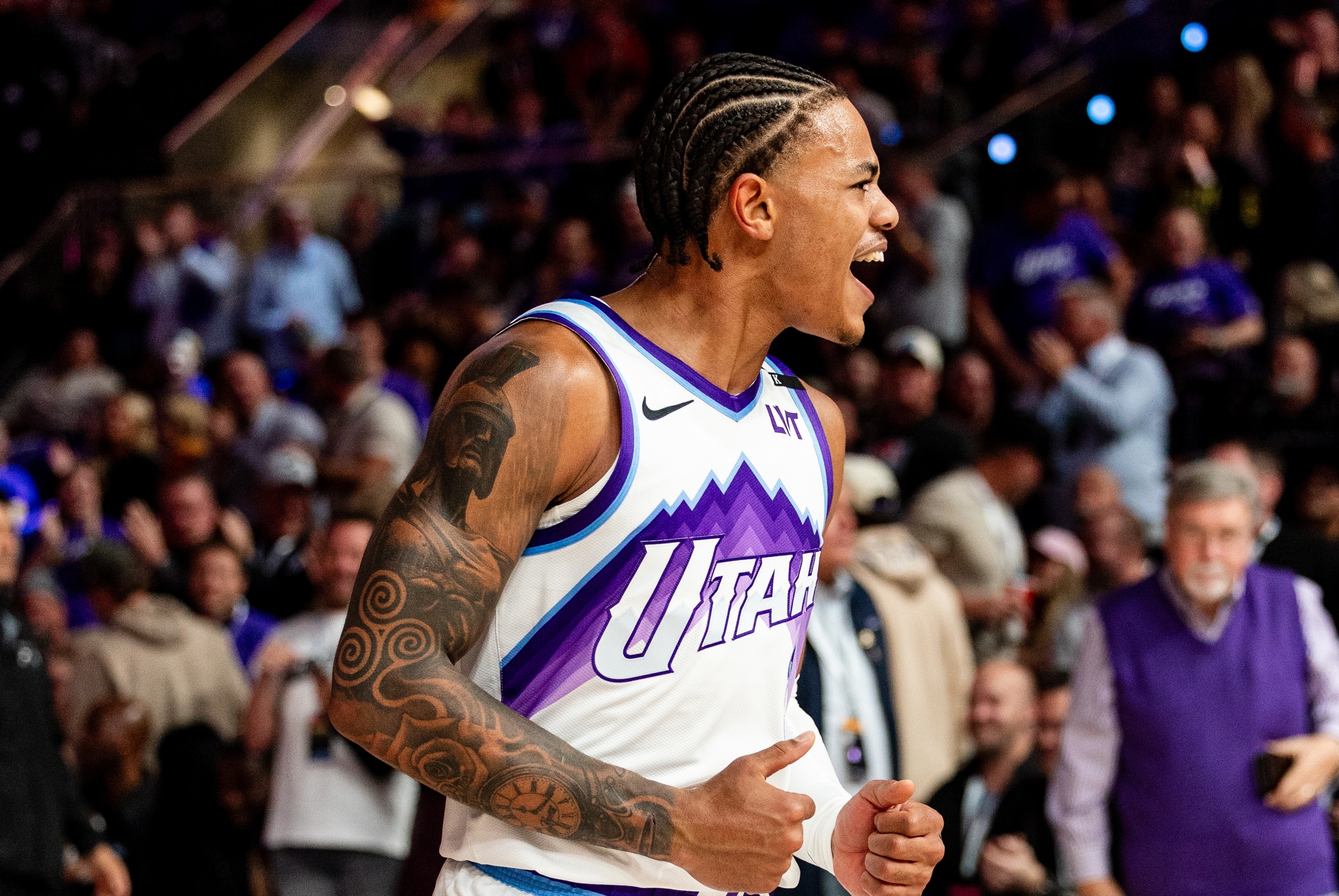
Jazz Future Focus: Keyonte George's Return & Roster Shifts
The Utah Jazz fanbase has been on an emotional rollercoaster this season, navigating the highs of budding potential and the inevitable lows that come with a developmental period. However, recent developments offer a compelling glimpse into the team's future, centered around the return of promising guard Keyonte George Jazz. After a challenging spell on the sidelines, George's re-entry into the lineup against the New Orleans Pelicans marked a significant moment, even as the broader roster continued its strategic evolution, heavily featuring two-way players and prospects.
While the game itself resulted in a 115-105 loss, the return of the Jazz's starting point guard provided a much-needed morale boost and a clear signpost for what's to come. It’s a compelling narrative of resilience, strategic development, and the meticulous crafting of a future contender in the NBA. This article delves into George's journey back to the court, the underlying frustration he faced, and the broader implications of Utah's evolving roster, particularly the pivotal role being afforded to its two-way talent as the season winds down.
Keyonte George's Resilient Return to the Jazz Hardwood
The path back to the court for Keyonte George was far from smooth. What began as an initial left ankle sprain early in February turned into a disheartening setback when he re-injured his right ankle after playing just 13 minutes in his attempted return on February 7th. This dual-ankle saga sidelined him for six consecutive games, casting a shadow of frustration over the young guard.
George openly expressed the mental toll of his absence. "To be completely honest, there was a little frustration," he confessed. His passion for the game, his teammates, and the entire Jazz staff runs deep, making his inability to contribute fully a genuine source of anguish. For a player who typically immerses himself in basketball, constantly reviewing game tape and scouting opponents, the forced inactivity was particularly challenging. To avoid "driving himself crazy" watching a sport he couldn't play, George found an unexpected escape in television, humorously crediting "Scandal" and its formidable protagonist, Olivia Pope, with helping him cope.
His return against the Pelicans was a testament to his determination. Despite a significant layoff, George wasted no time making an impact. In a carefully managed 23 minutes, he efficiently chipped in 17 points, accompanied by four assists and two rebounds. This immediate production, even within a strict minutes restriction, underscored his value and potential as a primary offensive initiator for the Utah Jazz. His ability to step back into the starting lineup and contribute offensively speaks volumes about his readiness and the work he put in during his recovery.
Navigating the "Mixed Bag": Minutes Restrictions and Future Outlook
While George's return was met with enthusiasm, it was also tempered by a necessary layer of caution. Head coach Will Hardy confirmed a minutes restriction, somewhere between 20 and 24 minutes, for the foreseeable future. This measured approach is crucial for a young player recovering from multiple ankle injuries, ensuring a gradual re-acclimation to NBA intensity without risking further setbacks. For the Jazz, prioritizing George's long-term health and development over immediate, full-throttle exertion is a clear strategic decision, reflecting their commitment to nurturing their core talent.
From a strategic standpoint, managing George's minutes presents a unique challenge for Coach Hardy. It requires careful rotations and a flexible game plan to maximize his impact within limited bursts. However, it also provides valuable opportunities for other guards to step up and gain experience, aligning with the team's broader developmental goals. George himself reported feeling "great" post-game, with no soreness or lingering issues, which is an extremely positive sign for his recovery and continued progress.
The cautious re-entry of the Keyonte George Jazz player is a practical tip for any organization dealing with young, high-potential athletes returning from injury. It’s a balance between wanting their talent on the floor and safeguarding their future. This careful management not only protects the player but also instills confidence in their physical well-being, allowing them to play freely and effectively when they are on the court. It's a foundational aspect of building a sustainable, successful franchise.
The Jazz Roster Unveiled: Two-Way Players Stepping Up
George's return, while significant, occurred within a broader context of profound roster shifts for the Utah Jazz. The "doldrums" of the season, as some might call the late-season period for non-contending teams, have transformed into a fertile ground for player development. The starting lineup alongside George in that Pelicans game — featuring Ace Bailey, Kyle Filipowski, Cody Williams, and two-way player Blake Hinson — painted a vivid picture of Utah's present priorities. Furthermore, two-way guard Elijah Harkless logged significant minutes off the bench.
This heavy reliance on two-way players and other developing talents is a deliberate strategy. In the NBA, a "two-way contract" allows teams to assign players to their G-League affiliate while also making them eligible to play up to 50 games for the NBA team. This flexibility is invaluable for player development, offering these athletes extended run in high-level NBA games that they wouldn't typically receive on a playoff-bound roster.
Coach Will Hardy articulated the immense value of this opportunity, highlighting how these games are critical for players to "understand and continue to form their NBA identity." He specifically praised Elijah Harkless, noting he's "probably a little bit further along than Blake," with a "relatively clear" identity. Of Blake Hinson, Hardy observed that he "gives us some great spacing offensively" and is "dangerous" when playing off the catch. This kind of extended evaluation in live NBA settings is precisely how teams uncover hidden gems, as exemplified by the Oklahoma City Thunder finding an All-Defensive First Team starter in Lu Dort, who initially rose through the ranks on a two-way deal.
The Developmental Imperative: Shaping Tomorrow's Jazz
The current phase of the Jazz season is less about immediate wins and losses and more about meticulous evaluation. These games, particularly those where developing players like Keyonte George are integrated with two-way contract holders and other prospects, are invaluable. They serve as extended tryouts, a proving ground where potential is tested against the unforgiving crucible of NBA competition. Coaches are not just looking at box score statistics; they're assessing coachability, defensive effort, decision-making under pressure, and how well players adapt to different roles and schemes.
For the two-way players getting significant minutes, this is their moment to demonstrate not just skill, but also consistency, professionalism, and a willingness to embrace an NBA role. It's an opportunity to solidify their place in the team's future plans, potentially earning a standard contract. The Jazz are looking for players who can complement their existing young core, including players like George, forming a cohesive unit that can grow together.
The interplay between an established young player like Keyonte George and the emerging two-way talent creates a unique dynamic. George, though young himself, brings a level of experience and a developing understanding of the NBA game that can serve as a valuable reference point for his less experienced teammates. This symbiotic relationship, where veterans mentor and young players push each other, is a cornerstone of successful team building and will be critical as the Jazz continue to shape their roster for future contention.
Conclusion
The return of Keyonte George Jazz to the lineup represents more than just a player coming back from injury; it's a beacon of hope and a clear indicator of the Utah Jazz's future-focused strategy. George's resilience in overcoming physical and mental frustrations, coupled with his immediate on-court production, underscores his immense potential. Simultaneously, the Jazz's commitment to heavily featuring and evaluating two-way players signals a pragmatic approach to roster construction, seeking to unearth foundational talent for tomorrow.
As the season progresses, every minute played by George and every opportunity given to promising prospects will be scrutinized, not for playoff contention, but for the building blocks of a formidable team. The "Jazz Future Focus" is firmly on player development, strategic evaluation, and the diligent cultivation of a roster capable of achieving sustained success in the years to come.