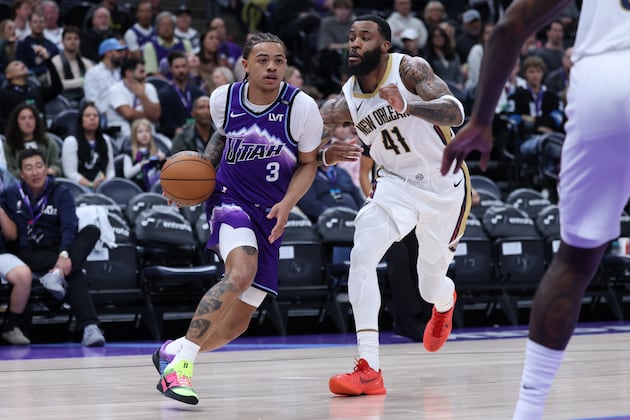
Keyonte George Returns to the Hardwood: A Mixed Bag for the Jazz
The Utah Jazz faithful have been navigating a season filled with peaks, valleys, and significant developmental insights. Amidst this journey, the return of rising guard Keyonte George to the lineup on Saturday against the New Orleans Pelicans marked a pivotal moment for the Keyonte George Jazz squad. Playing for the first time since February 7th, George's presence was a welcome sight, offering a glimpse into the team's future core. However, as with much of the current Jazz narrative, this good news arrives alongside a candid acknowledgment of where the team stands in the broader NBA landscape – a developmental phase where "two-way guys are starting games," as one observer noted, highlighting the dual nature of progress and ongoing growth.
George's re-entry into competitive play wasn't just a simple roster move; it represented the culmination of a frustrating period spent on the sidelines. His return, even in a 115-105 loss to the Pelicans, signified a crucial step forward for a player widely regarded as a key piece of the Jazz's long-term vision. For fans eager to track the evolution of the Keyonte George Jazz experience, his performance and the surrounding context offer valuable insights into both his personal recovery and the team's strategic direction.
The Frustration of the Sidelines: Keyonte George's Mental Battle
The path back to the court was anything but smooth for Keyonte George. The month of February proved particularly challenging for the young guard. He initially suffered a left ankle sprain, made his return on February 7th, only to endure another setback – a sprained right ankle – just 13 minutes into his comeback game. This immediate re-injury, occurring after a mere six games of absence, clearly took a toll on his mental well-being.
"To be completely honest, there was a little frustration," George openly admitted, his words resonating with any athlete who has faced the agony of injury. His passion for basketball runs deep, extending beyond just playing. "I just love the game, these guys, the locker room and everybody on staff. They feel like family to me, so when I can’t give everything that I feel like I can give, I don’t know." This sentiment underscores the profound connection athletes form with their sport and their team. Being sidelined isn't just a physical challenge; it's an emotional and psychological one, stripping away their ability to contribute to something they hold dear.
During his recovery, George found himself in an unfamiliar and unsettling mental space. "I just didn’t know how to feel on game days...I didn’t know what to do with myself." For many players, down time is spent immersed in basketball – reviewing game tape, analyzing opponents, studying the league. However, for George, this became counterproductive. He chose a different path, deliberately stepping away from the constant analysis to preserve his sanity. Instead of driving himself "crazy" watching basketball he couldn't play, he found solace in binge-watching the popular ABC drama "Scandal," even giving a "shout out" to Olivia Pope (Kerry Washington's character) for the distraction. This personal anecdote offers a relatable glimpse into the mental fortitude required to navigate injury and highlights the importance of finding healthy coping mechanisms away from the intensity of professional sports.
Tips for Athletes Facing Injury:
- Acknowledge Frustration: It's normal to feel upset, angry, or helpless. Suppressing these feelings can be detrimental.
- Stay Connected: Even if you can't play, remain engaged with your team. Attend practices, be present in the locker room, support from the sidelines.
- Set Small Goals: Break down your recovery into manageable steps. Celebrate each milestone, no matter how minor.
- Find Distractions: Engage in hobbies or activities completely unrelated to your sport to give your mind a break.
- Seek Support: Don't hesitate to talk to teammates, coaches, trainers, or even a mental health professional if the emotional toll becomes overwhelming.
Performance on Return: Glimpses of Potential Amidst Restrictions
In his highly anticipated return against the Pelicans, Keyonte George was, as expected, under strict minutes restrictions. Jazz head coach Will Hardy confirmed that George would be limited to somewhere between 20 and 24 minutes. True to form, George played 23 minutes, demonstrating the team's cautious approach to his recovery and long-term health. Despite the limited court time, George showed flashes of his potential, contributing 17 points, four assists, and two rebounds.
While his shooting percentages (4-11 FG, 1-6 3Pt) might not jump off the stat sheet, his ability to get to the free-throw line (8-10 FT) indicates his aggressive attacking style and comfort level in initiating offense. Importantly, George reported feeling "great" after the game, with no soreness or issues, a significant relief for both him and the Jazz organization. This positive physical feedback is paramount, suggesting that the conservative approach to his return is paying off. The minutes restriction is likely to continue for a "little longer," allowing his body to gradually re-acclimatize to the rigors of NBA play.
For the Keyonte George Jazz narrative, these limited minutes are less about immediate statistical dominance and more about re-establishing rhythm, rebuilding confidence, and proving sustained health. Each minute on the floor is an investment in his future as the team's potential starting point guard. It provides him opportunities to re-engage with the offense, make reads, and adapt to game speed without excessive strain, ensuring a more durable return to full strength.
Beyond Keyonte: The Jazz's Developmental Crossroads
While George's return was a focal point, the broader context of the Jazz's current roster paints a clear picture of a team firmly in a developmental stage. George was joined in the starting lineup by a host of unproven talents: Ace Bailey, Kyle Filipowski, Cody Williams, and two-way player Blake Hinson. Additionally, two-way guard Elijah Harkless logged 28 minutes off the bench. This heavy reliance on two-way contracts and young prospects is a stark indicator of the Jazz's long-term strategy, prioritizing future growth over immediate playoff contention.
This approach, while potentially leading to more losses in the short term, offers significant silver linings. NBA teams rarely get the opportunity to provide such extensive playing time to their two-way players in meaningful games. This extended run is invaluable for these athletes, allowing them to showcase their skills, learn at the NBA level, and "form their NBA identity," as Head Coach Will Hardy observed. Hardy specifically highlighted the progress of his two-way players, noting that EJ Harkless is "probably a little bit further along than Blake," with a "relatively clear" identity, while Blake Hinson offers "great spacing offensively" and is "dangerous" playing off the catch. These insights are crucial for future roster construction.
The precedent set by teams like the Oklahoma City Thunder with Lu Dort, who transitioned from a two-way deal to an All-Defensive First Team starter, serves as a powerful reminder of the potential unearthed through such opportunities. For the Jazz Future Focus: Keyonte George's Return & Roster Shifts are intrinsically linked to this developmental strategy. Every game now becomes an audition and a learning experience, shaping who will be part of the Jazz's core moving forward.
The Value of "Developmental" Seasons:
- Player Evaluation: Extended minutes for young players reveal true potential under game pressure.
- Roster Chemistry: Allows new combinations to form and individuals to find their roles.
- Draft Positioning: While not the sole goal, a lower win total often translates to better draft lottery odds.
- Future Investment: Identifying and nurturing talent on two-way deals or through late-round picks can yield significant long-term value.
Conclusion
Keyonte George's return to the Utah Jazz lineup is a testament to his resilience and dedication, overcoming the frustrating setbacks of a double ankle sprain. His performance, even under minute restrictions, provided an encouraging glimpse of his potential as a foundational piece for the franchise. The mental fortitude he displayed in coping with injury, choosing "Scandal" over tape to avoid emotional burnout, offers a humanizing perspective on the athlete's journey.
Simultaneously, the Jazz are clearly in a pivotal developmental phase, utilizing extended minutes to evaluate a host of young talents, including their two-way players. This strategic investment in the future, while presenting immediate challenges in the win column, holds the promise of uncovering future stars and building a sustainable, competitive roster. As the season progresses, every minute played by Keyonte George and his young teammates will be scrutinized, not just for individual stats, but for their contribution to the evolving identity of the Utah Jazz.